Two Person Video Podcast Setup: What You Actually Need
Two people, two chairs, one conversation. It is the most common podcast format there is, and it is also the one most frequently over-engineered. Search for advice and you will be handed a shopping list built for a panel show, a comparison table of fourteen microphones, and a long explanation of why multi-camera coverage matters. None of that helps you walk into a studio on a Tuesday morning and record a good episode.
This is a practical description of what a two person video podcast setup actually involves: where the cameras go, how the audio is arranged, what comes with a studio booking, and what you need to decide before you turn up. It is scoped deliberately to two speakers. A three or four guest show is a genuinely different job, and we will cover why towards the end.
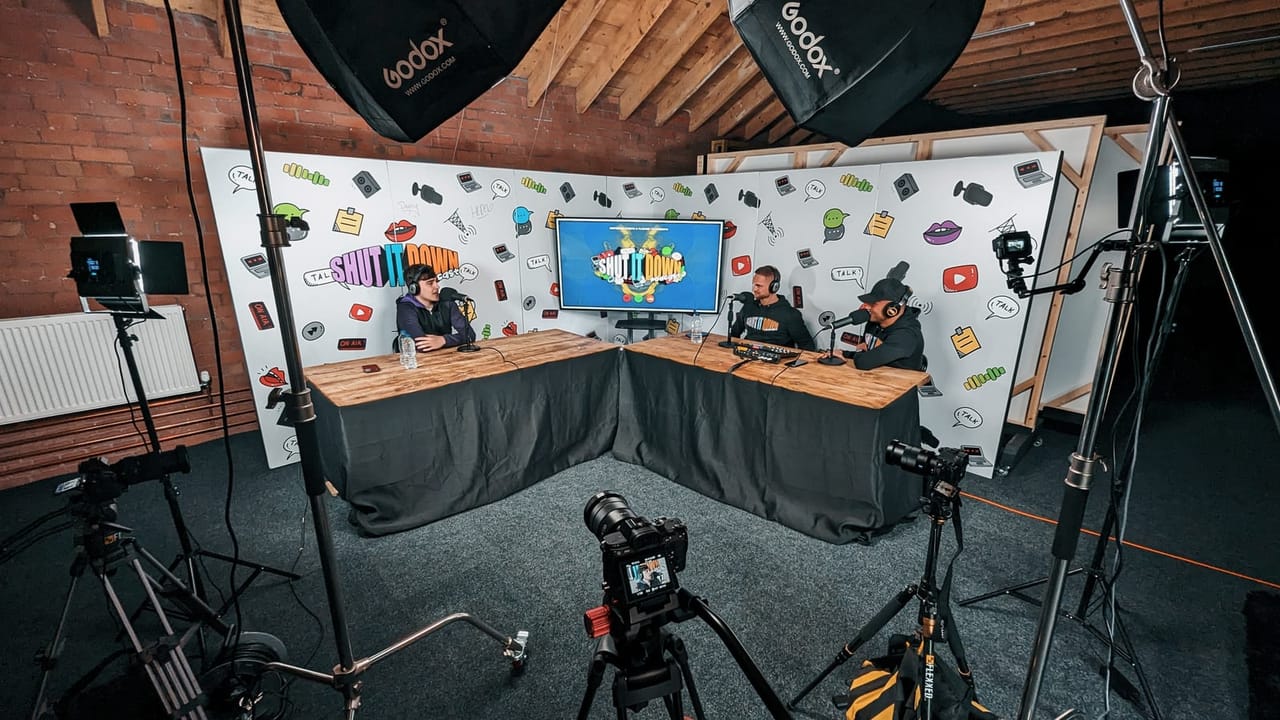
The camera layout for two people
A two-handed conversation needs three camera positions. Not two, which leaves an editor stuck, and not five, which adds cost and cutting time without adding anything an audience notices.
The wide two-shot. A single frame holding both speakers, usually straight on or very slightly off axis. This is your establishing shot and your safety net. It tells the viewer who is in the room and how they relate to each other, and it is the angle you cut back to when both people talk at once, when someone laughs, or when a reaction matters more than a line of dialogue. It is also the shot that covers you if anything goes wrong on an individual angle.
A close-up on each speaker. Typically framed as a loose medium close-up, chest up, with the speaker slightly off-centre and looking across the frame towards their co-host. That looking room is what makes the two singles feel like parts of one conversation rather than two separate interviews stitched together. Both close-ups should be matched: same height, same rough framing, same lens character. Mismatched singles are the single most common reason an otherwise decent two-person episode looks amateurish.
That is the whole layout. There is no meaningful case for a fourth angle on a two-hander. An overhead or a wide profile shot sounds interesting in the planning stage and then gets used once in a forty-minute edit, if at all. What does occasionally earn its place is a dedicated vertical capture or a crop reserved for social clips, which is worth discussing in advance rather than discovering you need it afterwards.
Seating matters as much as camera placement. Two speakers positioned too far apart force an awkwardly wide two-shot with a canyon of empty table between them. Too close and the framing feels cramped. A slight angle towards each other, rather than squared off like a job interview, reads as conversation on camera and makes the eyelines in the singles look natural.
Microphones for exactly two speakers
Audio is where a two-person show is most forgiving and where it most often goes wrong anyway.
The default is one microphone per speaker, recorded to a separate track. This is not a luxury. Two voices almost never match: one person projects, the other is quieter and leans in; one has a deep chest resonance, the other sits higher. With separate tracks those differences can be balanced properly in post. With a shared microphone they cannot, and you are left choosing whose voice sounds right.
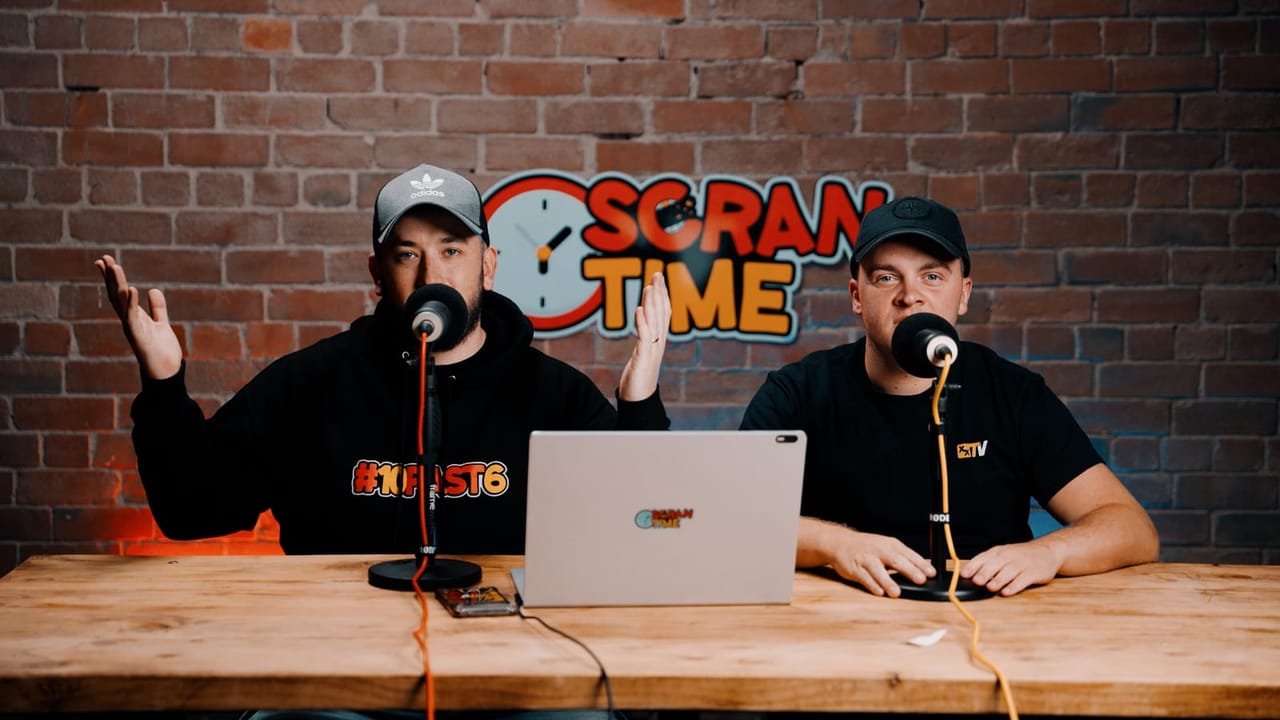
For most two person video podcast setups the microphone sits on a desk stand or a boom arm, positioned close enough to reject the room and angled so it does not block either face in the close-up. Getting that balance right is a judgement call made in the room: too low and the voice loses body, too high and the mic becomes the star of the shot. Lapel microphones are an alternative where you want the frame visually clean, though they trade a little character in the sound for that tidiness.
Two speakers in one space will always bleed into each other’s microphones to some degree. That is normal and usually harmless. What matters is that the bleed is consistent, which comes from people staying roughly in position rather than drifting back in their chairs as they relax. Worth mentioning to guests before you roll.
The other audio decision is whether you want a reference mix alongside the isolated tracks. Having both means an editor can work quickly from the mix while still having the individual channels available for any passage that needs attention. It costs nothing at the recording stage and saves time later.
What a two-person booking at the Flexxed studio includes
Booking the studio for a two-hander means arriving to a room that is already configured for the format rather than building one from scratch.
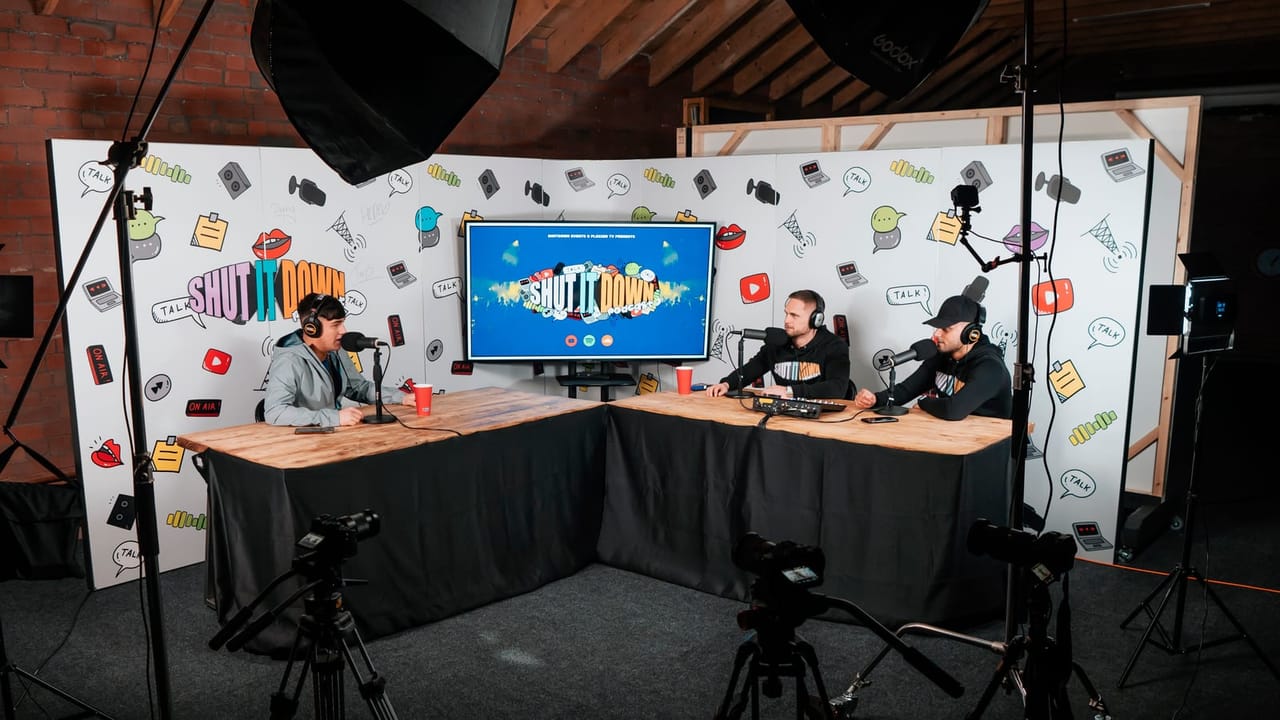
That covers the camera positions described above, lighting set for two seated speakers (key, fill and separation from the background, adjusted for skin tones rather than left on a default), microphones and recording for two channels, and the set itself. You are not hiring an empty room and a box of kit.
Crew presence is part of it. Someone is there to set levels, check framing before you start, monitor the recording while it runs, and deal with the problems that only show up once two people start talking: a chair that creaks, a bracelet that taps the table, a sibilance issue on one voice. Self-operated recording is possible, but for a two-person show where both hosts are focused on the conversation, having someone else watching the technical side is the difference between a smooth session and one that stops every ten minutes.
On delivery, there is a standard turnaround for edited output and an express option where a deadline is tight. The right one depends on your publishing schedule and what you need beyond the main episode, so it is worth confirming both the timing and the deliverables list when you enquire rather than assuming. Social cuts, captions and thumbnails are all things to specify up front.
The podcast recording studio page covers the room, the formats it handles and what a session looks like in more detail.
How a two-hander differs from a three or four guest shoot
The practical differences are larger than the headcount suggests, and they almost all work in your favour.
The brief is simpler. With two speakers there is no seating puzzle, no question about who faces whom, no need to plan for a guest who joins halfway through. The layout is effectively fixed, which means the planning conversation before a session is short.
Setup on the day is faster. Four microphones to balance, four eyelines to check and four sets of clothing to light take meaningfully longer to get right than two. That time comes out of your recording window.
The edit is quicker and cleaner. Cutting a conversation between two people is largely a question of who is speaking and who is reacting. Add a third and fourth voice and the editor is tracking crosstalk, interruptions and reaction shots across multiple angles, deciding every few seconds who the audience should be watching. More angles plus more voices equals disproportionately more edit time.
The cost of complexity drops. Fewer channels, fewer angles, less post time. A two-person format is not a cheaper version of a panel show, it is a different and inherently less complicated job.
None of this makes a panel show the wrong choice. It just means that if your show genuinely is two people, you should not be quoted or scheduled as though it is five.
How to brief the session
A short, clear brief beforehand is worth more than a long one.
Decide these in advance: episode length and how many episodes you want in the session (recording two or three back to back in one booking is common and efficient), who is leading the conversation, whether there is a scripted intro or outro, and your rough running order. You do not need a word-for-word script, but knowing the shape of the episode keeps the recording tight.
Say what you need out of it. The long-form episode is one thing. Vertical social clips, captioned highlights, a trailer or audio-only versions are all reasonable asks, but they influence how the session is shot. Vertical crops in particular are easier when planned at the framing stage than retrofitted afterwards.
What to bring. Notes or a running order on paper or a tablet rather than a phone you will be tempted to check. A change of top if you are recording multiple episodes and want them to look like separate days. Avoid tight stripes and very fine patterns, which can shimmer on camera, and keep jewellery quiet. Any product, book or prop you plan to hold up should come with you rather than being described.
Flag a remote guest early. If one of your two speakers is joining from elsewhere, that is a different setup: the in-studio side still gets full treatment, but the remote side depends on their camera, their connection and their room. Knowing at the booking stage means the session can be built around it, including how the remote feed is framed against the studio angles so the finished edit does not look lopsided.
Getting a price
What a two-person session costs depends on how long you need the room, how many episodes you are recording, what you want delivered and how quickly. Those variables are why there is no useful single figure to publish, and why an honest answer needs about two minutes of detail from you.
Tell us the format, the rough session length and your deadline, and you will get a fast quote from Flexxed scoped to a two-person show rather than priced as though you were bringing a panel.
Questions
Frequently Asked Questions
How many cameras do you need for a two person video podcast?
Three is the usual answer: a wide two-shot that holds both speakers, plus a close-up on each person. That gives an editor everything needed to cut a natural conversation without any angle feeling repetitive.
Can one microphone cover two podcast hosts?
It can, but it rarely sounds good. A shared mic means you cannot balance two different voices independently, and background noise sits on top of both. A separate microphone per speaker, recorded as separate tracks, is the sensible default.
Is a two person podcast cheaper to produce than a panel show?
Usually, yes. Fewer microphones, fewer camera angles and fewer overlapping voices mean a simpler setup on the day and a faster edit afterwards. The saving comes from reduced complexity rather than a reduced standard.
Can one of the two speakers join remotely?
Yes, with planning. A remote guest can be brought into the session, but the picture and sound quality depend heavily on their end, so it is worth flagging at the booking stage so the setup can be arranged around it.
What should we decide before arriving at the studio?
Episode length, rough running order, who leads the conversation, whether you want vertical clips for social, and your turnaround requirement. Those five decisions shape almost everything else.