How to Actually Pull Off a One-Take Music Video Shoot
Search "one take music video ideas" and you will find plenty of concepts. A walk through a house where each room shifts a decade. A backwards route through a club. A single corridor that keeps turning into somewhere else. These are fine ideas. The problem is that none of them tell you anything about whether you can actually deliver them, because the idea has never been the hard part of a continuous shot.
The hard part is that you have removed the edit. Every tool a normal video production relies on to fix problems quietly has gone. No cutting away from a fluffed lyric. No covering a focus miss with a reaction shot. Whatever happens in those three and a half minutes is the video.
That is why a one-take video is a production planning job first and a creative job second. Below is how a crew approaches one, and how to tell whether the format suits your track and your budget at all.
The idea is the easy bit
A continuous take is a chain of dependencies. The performer hits a mark at 0:48, which only works if the camera has cleared the doorway by 0:45, which only works if the second performer has moved out of frame by 0:43, which only works if the door was opened by someone standing just outside the shot. Break one link and the whole run is dead.
In a conventional shoot, each of those moments is a separate setup with its own slate. You get three or four goes at each, and the edit assembles the best of them. In a one-take, the chain has to survive intact from start to finish, repeatedly, for long enough to bank a version you are happy with.
So the useful question at concept stage is not "what would look amazing" but "how many dependencies does this idea contain, and which of them can we remove". A concept with eight timed handoffs is not eight times harder than one with a single handoff. It is considerably worse than that, because the odds compound. Strong one-take concepts tend to be ones that have been deliberately simplified: fewer moving parts, each one given more room to breathe.
This is also where you decide what the camera is actually doing. A continuous take needs a reason to move. If the camera is just following someone walking, the format adds nothing and an edit would serve the song better. The best continuous shots use the unbroken time to build something: a space revealing itself, a performance escalating, a world assembling around the artist as they move through it. That intent then drives every logistical decision that follows.
Blocking and rehearsal before anyone rolls
Blocking is where a one-take video is genuinely made. Crews typically start on paper or in a simple floor plan, marking the camera path, the performer paths and the position of every crew member who needs to be somewhere specific. Then they walk it, usually without the camera at all.
The first walkthrough is about distance and time. Does the route actually take the length of the chorus to cover, or does it take half of it? Music video blocking is unusual in that the timings are fixed by the track rather than by performance. You cannot slow down a section to make it fit. If the camera arrives at the second verse location eleven seconds early, the route changes or the choreography changes.
Once the route holds together, rehearsals move to full speed with the track playing. Crew learn their cues from the music rather than from a call, because a shouted instruction mid-take is audible to everyone and distracting to the performer. People doing set changes, moving lights, opening doors or handing off props all rehearse to specific lyrics or beats.
Expect this to be the majority of the day. It is not unusual for the camera to spend hours running the route before anything is treated as a real take, and that is the thing that makes the later takes usable.
Choosing the rig for the route
Rig choice follows the route, never the reverse.
A gimbal is the default for most contemporary one-take work. It is light, quick to reposition, and manageable in tight interiors and through doorways. Its weakness is operator fatigue on long runs and a slightly floatier feel than a vest-based rig. For a three minute take with plenty of tight geography, it is usually the right answer.
A Steadicam with a full vest and arm suits longer, more continuous travel, particularly exteriors or large interiors where the operator is moving for the whole duration. It carries the camera’s weight properly, and the resulting movement has a distinct character that reads as deliberate rather than merely stabilised.
A slider or dolly can anchor sections where the camera needs to be perfectly level and controlled, though you then have to plan how the camera gets on and off it without a visible wobble.
Drone handoffs are effective when an exterior needs to open up, but they are the highest risk element in any continuous shot. A handoff between a drone and a ground operator has to be rehearsed until it is boring, and it is weather dependent in a way the rest of the shoot is not. If the budget allows only one ambitious element, it is often better spent elsewhere.
Focus deserves a mention too. A continuous take usually means a focus puller working off a wireless unit, following marks they cannot always see across changing light levels, so build rehearsal time for them as deliberately as you do for the performers.
Audio, sync and why most one-take videos mime
Almost every one-take music video you have watched was shot to playback. The track plays loud on set, the artist mimes, and the footage is synced to the master in post. That removes most of the audio risk, but not all of it. Over an unbroken take, drift creeps in. If the playback stutters or the speaker is too distant in the later part of the route, the performer’s timing slips and there is no cut available to hide it. Crews handle this by distributing playback along the route so the artist always hears the track clearly, and by recording a scratch track on camera as the sync reference.
A clear sync point at the top of every take matters more than usual. A clap or a sharp sound cue gives the editor something unambiguous, and on a shoot where you may bank a dozen full runs, clean labelling saves real time later.
Genuinely live performance is a different proposition. It is achievable and it can be the entire point of the video, but it means committing to the performance exactly as it happened, with whatever tuning, timing and room sound comes with it. That is a decision worth making consciously rather than discovering on the day.
Budgeting the takes, not just the shoot
The question every band asks is how many takes it will need. The honest answer is that you do not know, which is why you budget time rather than takes.
What drives the number is reset time. If resetting the route means moving props back, repositioning six people and walking the camera operator ninety seconds to the start, each failed take costs several minutes before you can go again. Multiply that across a day and reset discipline becomes the biggest single factor in how many real attempts you get. So design the reset alongside the route: where can people cut back to position quickly, can the lighting change be reversed in seconds, and is someone assigned purely to reset rather than everyone drifting back at their own pace?
It is also worth deciding in advance what counts as a failure. A small stumble at 0:20 is an obvious reset. A minor imperfection at 2:50 might be acceptable if the rest of the run is strong. Agreeing that threshold with the artist before the day avoids a long argument at hour seven.
Location logistics that only matter in a continuous shot
Ordinary locations behave differently once you cannot cut.
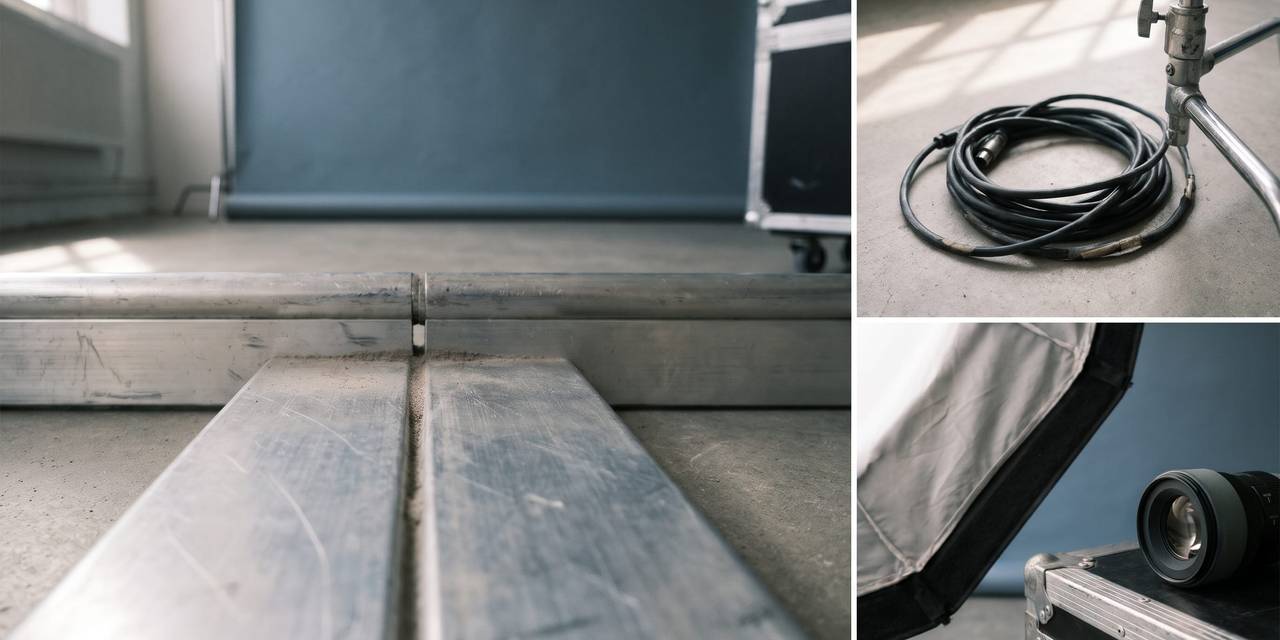
Sightlines become the main constraint. In a normal shoot, crew and kit live just outside frame and the frame barely moves. In a continuous take, the camera will eventually point at nearly everything, so lights, stands, cables, cases and crew all need somewhere to hide, or need to be dressed into the scene deliberately.
Hidden cuts are the pressure valve. A whip pan, a pass behind a pillar, a moment of darkness or a body crossing the lens can disguise a join between two takes. Knowing where your potential hidden cuts sit does not oblige you to use them, but it means a failure at 2:40 does not necessarily cost you the whole run.
Access and control matter more than usual, because you need the same conditions across many consecutive attempts. A public location you can only hold intermittently is a poor fit. Doors, lifts, stairwells and gates all need someone responsible for them, and changing daylight through windows is a real issue when takes are spread across several hours.
When the format suits your budget, and when it does not
A one-take approach suits you when the concept is simple and strong, the location is controlled and available for a full day, and the band can hold a convincing performance under repetition. It suits artists who want a video with an obvious identity and a clear hook, and who would rather invest in one confident gesture than a lot of coverage.
It suits you less when the track needs variety to hold attention, when the schedule is squeezed into a couple of hours, when the location is public and unpredictable, or when the concept keeps growing extra rooms and extra handoffs. In those cases the money goes further on a well planned multi-shot video, which can absorb problems on the day without threatening the whole deliverable.
The decision usually comes down to one honest conversation about what you can control. Everything else follows from that. If you want to talk through whether your track and location can carry a continuous take, or see what else is possible for the budget, take a look at our approach to music videos or get a fast quote from Flexxed.
Questions
Frequently Asked Questions
How many takes should we budget for a one-take music video?
Plan for a full shooting day where the early takes are effectively extended rehearsals. The usable version usually arrives once the crew and performers have run the full route enough times for the timings to stop drifting. Booking a location for the bare minimum window is the single most common way these shoots fail.
Is a one-take video cheaper than a conventional multi-shot video?
Not automatically. You save on edit time and coverage, but you spend it again on rehearsal hours, a stabilised rig, an operator who can run the route repeatedly and a location you can hold for longer. It is cheaper when the concept is simple and the location is controlled, and more expensive when it involves multiple rooms, vehicles or crowd control.
Can you really do a continuous take on a gimbal, or do you need a Steadicam?
Both work, and the choice depends on the route. A gimbal is lighter and better for tight interiors and quick handovers, while a Steadicam rig with a proper vest is easier on the operator across long unbroken runs and holds a more classical feel. The route dictates the rig, not the other way round.
Do we have to sing live on camera?
No. Most one-take videos play the track back on set and the artist mimes to it, which keeps the performance locked to the master recording. Live vocals are possible but introduce sync and tuning risk across a take you cannot cut away from.
What happens if a take fails near the end?
You reset and go again. That is why the schedule, not the camera, is the real safeguard. A well planned shoot has reset time built into every run so a failure at the three minute mark costs you a few minutes rather than derailing the day.