Music Video Ideas for Love Songs: Concepts That Work
Search for love song video ideas and you will find the same handful of suggestions recycled endlessly: a montage of old photographs, a couple walking on a beach at golden hour, a candlelit room with fairy lights. There is nothing inherently wrong with any of those images. The problem is that they are described as if the image alone is the idea, when in practice the image is the easy part. What makes a love song video land is structure, coverage and craft, which is to say the things a crew actually plans before anyone switches a camera on.
This piece looks at love song concepts from the production side. What each type of treatment demands, where it tends to fall down, how location shapes the emotional register, and what you need to put in front of a production company so they can turn your idea into a shoot schedule.
The four concept types that cover almost everything
Most love song videos fall into one of four structural approaches, or a deliberate blend of two. Knowing which one you are making shapes every decision that follows.
Narrative. The video tells a story with a beginning, middle and end, usually about two people. This is the most ambitious option and the one most likely to go wrong on a small budget, because narrative needs performers who can carry emotion without dialogue, locations that read as a coherent world, and enough shot coverage to cut a scene properly. A narrative love song video is essentially a short film with no sound design and a fixed runtime. If your song is three and a half minutes, you have roughly three and a half minutes to make an audience care about two strangers. That is achievable, but it requires a tight story. One decision, one turning point, one consequence. Not a whole relationship from first meeting to wedding.
Performance-led. The artist performs the song to camera, in one location or several, and the video lives or dies on presence and lighting. This is the most reliable concept and the least boring of the four when it is done well, because nothing connects with a listener like watching someone actually mean the words. Performance videos reward strong art direction and multiple setups. Four or five distinct looks across a day, cut together, gives an editor enough variation to keep three minutes moving. The common failure is a single wide shot held too long on a performer who has not been directed.
Lyric and visual metaphor. Rather than illustrating a story, the video builds a visual idea that runs alongside the lyric. A recurring object, a colour that shifts across the runtime, a physical process that mirrors the emotional one. Think of something being slowly built, unwrapped, submerged, lit. This approach suits love songs particularly well because romantic lyrics are often abstract, and literal illustration of an abstract lyric tends to feel clumsy. Metaphor gives the video something to do that the words are not already doing. It also tends to be achievable in a controlled environment, which makes it budget friendly.
Single continuous shot. One unbroken take, running the length of the song or a substantial section of it. For an intimate ballad this can be devastatingly effective, because the absence of cuts creates a sense of real, unedited time. It is also the concept most dependent on rehearsal. The camera move, the performer’s blocking, any lighting changes and any extras all have to work together on the same take. Expect to shoot it many times. The reward is a video that feels like a single held breath, and that is hard to fake with coverage.
Location does more work than any other single choice
The same performance shot in four different places produces four different songs. In the North West there is an unusual amount of range within short driving distance, and choosing well is the cheapest way to raise production value.
Moorland and open country. The Pennines, the West Pennine Moors and the edges of the Peak District give you scale, weather and isolation. This reads as longing, distance and something slightly unresolved. It suits songs about separation or about love that costs something. Practically, it means wind on microphones is irrelevant but wind on hair and clothing is not, and light changes fast. It is a location for a crew that watches the forecast.
Coastline. The Fylde coast, the Wirral and the stretches of sand around Morecambe Bay offer flat horizons, reflective wet sand and enormous skies. The visual register is softer than moorland. Where hills feel like obstacles, a beach feels like openness, which tends to read as hope rather than yearning. Tide times are a genuine scheduling constraint, not a detail.
Urban. Manchester and Liverpool give you brick, glass, neon, underpasses and rain on tarmac at night. Urban locations push a love song towards the contemporary and the slightly restless. They also solve a problem that rural locations create: at night, a city provides its own practical lighting. Streetlights, shopfronts and headlights are free sources that a crew can shape rather than build from scratch.
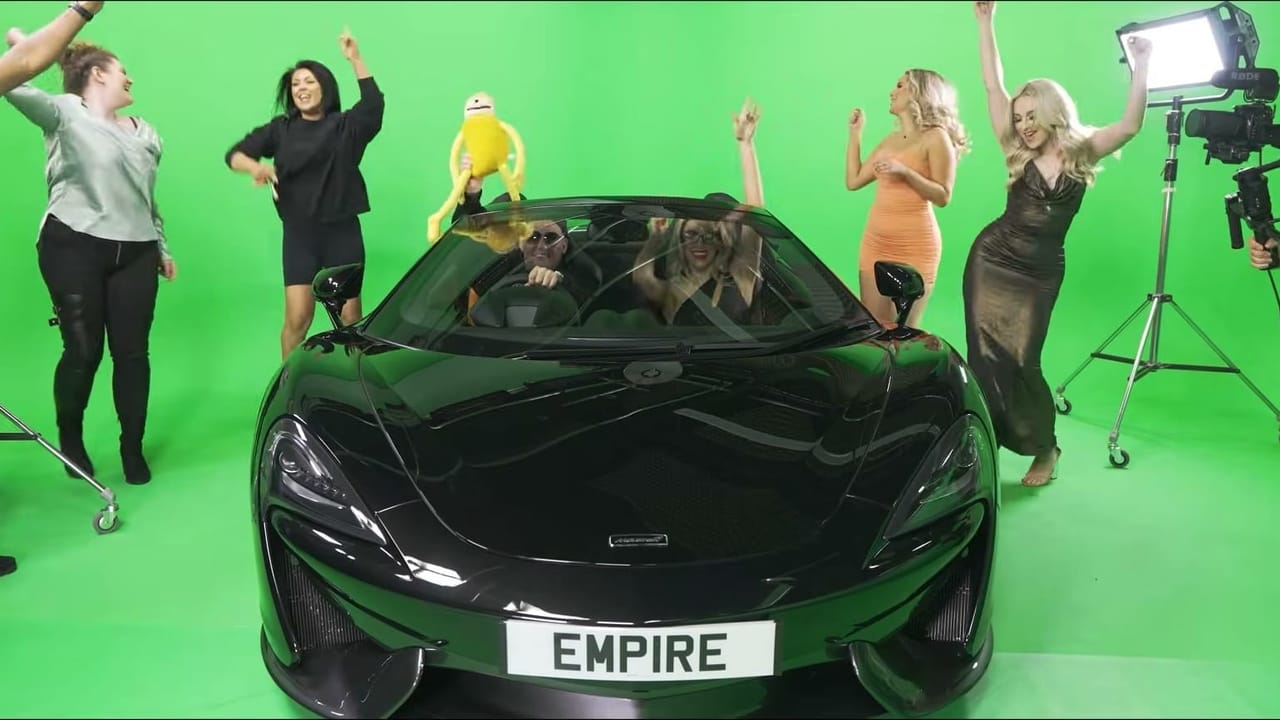
Studio. A controlled space is not a fallback. It is the right answer when the concept depends on precision. Colour, backdrop, haze, lighting that moves on cue, a set built for one shot. Studio work also removes every weather and permission variable, which matters enormously if you have a single shoot day and a fixed release date.
Technique is what separates a video from footage
A few production decisions consistently lift a love song video above the baseline.
Multicam coverage. Running two or more cameras on a performance means the editor can cut between a wide and a close on the same take, so the performer’s best delivery is usable from several angles. Without it, you are asking an artist to repeat the same emotional moment identically across multiple passes, and performances degrade as the day goes on. Multicam is the single most effective way to protect the authenticity of a vocal performance.
Lighting for intimacy. Intimacy on camera is largely a function of soft, directional light and controlled falloff. A large soft source close to the subject, with the background allowed to fall into shadow, isolates a performer and makes a room feel private. Practical sources in frame, a lamp, a window, a candle, give the eye something to believe. Flat, even lighting across a whole room is the enemy of a romantic video, because it reads as documentary rather than confession.
Aerial and establishing shots. Drone work earns its place at the top and tail of a video, not throughout. One rising shot that reveals two figures alone on a moor or a shoreline establishes scale in three seconds and buys you the right to stay close for the rest of the runtime. Aerial coverage requires appropriate licensing and airspace awareness, which is a crew responsibility rather than an artist one, but it is worth asking about early because some locations are restricted.
What a treatment is, and how to brief a crew
A treatment is a short written document that describes the video before it exists. It typically covers the concept in a paragraph or two, the visual references, the locations, the structure section by section against the song, and the practical requirements. It is not a shooting script. It is the shared understanding that everyone works from, so that the artist, the director and the crew are building the same thing.
You do not need to write one yourself. A production company will usually draft it. What you need to provide is the raw material.
Send the finished master of the track, not a rough mix, because the edit will be cut to the timing of the final version. Send the lyrics as text. Send three or four reference videos you genuinely like, with a line on what you like about each, because "I like this one" without explanation is almost impossible to act on. Say what the song is about, in plain language, including anything that is not obvious from the lyrics.
Then the practical layer: your release date, your availability, your budget range, whether you want to appear in the video and how comfortable you are performing on camera, and whether you already have a location or a second performer in mind. Honest answers here shape the concept more than any mood board. A concept built for an artist who hates being filmed in close-up will fail no matter how good it looks on paper. You can see the range of approaches we work across on our music video production page.
Process and turnaround
A typical project runs as a conversation about the song, a treatment, a pre-production phase covering locations, scheduling and any permissions, the shoot itself, then post. Editing includes the cut, a colour grade and at least one round of revisions, which matters because the first cut is a proposal rather than a finished piece.
Standard turnaround is around five working days from shoot to delivered video. Where a release date is locked and the schedule will not stretch, an express 48-hour option is available, though it tends to suit simpler concepts, performance and single-shot work rather than multi-location narratives that need extensive grading.
The best thing you can do for your own timeline is start the conversation before the track is mastered rather than after. Concepts improve with thinking time, and good locations need booking.
If you have a love song and an idea, or a love song and no idea at all, send over the track and a few notes and get a fast quote from Flexxed.
Questions
Frequently Asked Questions
What is the most popular concept for a love song video?
Performance-led videos remain the most common, because they put the artist front and centre and work for almost any song. Narrative and lyric-visual concepts tend to suit songs with a strong story or a repeated central image, and a lot of finished videos blend two approaches rather than committing to one.
Do I need actors for a narrative love song video?
Not always. Plenty of narrative videos use the artist and one other person, and some use nobody at all beyond hands, silhouettes and suggestion. If your concept needs two performers who have to carry emotion on camera, it is worth casting properly rather than asking a friend to stand in.
How long does a music video take to produce?
A standard turnaround is around five working days from shoot to delivered edit, which allows time for a proper grade and a round of revisions. An express 48-hour option is available when a release date is fixed and the schedule is tight.
What should I send a production company before a music video shoot?
Send the finished master of the track, the lyrics, any reference videos you like, and a short note on the feeling you want the video to leave people with. Practical details matter too: your availability, budget range, release date and whether you have locations or people already lined up.
Can a love song video be shot in one continuous take?
Yes, and it can be extremely effective for an intimate song, but it needs rehearsal. A single-shot video depends on choreography between the camera, the performer and the environment, so plan for a day with multiple full takes rather than expecting it in an hour.