What Makes a Good Recruitment Video (And How It’s Filmed)
Most recruitment videos fail in the first five seconds. Not because the company is unappealing, but because the film opens with a drone shot of a business park, a swell of library music and a managing director saying the word "journey". The candidate has seen that video before, for a different employer, and they scroll on.
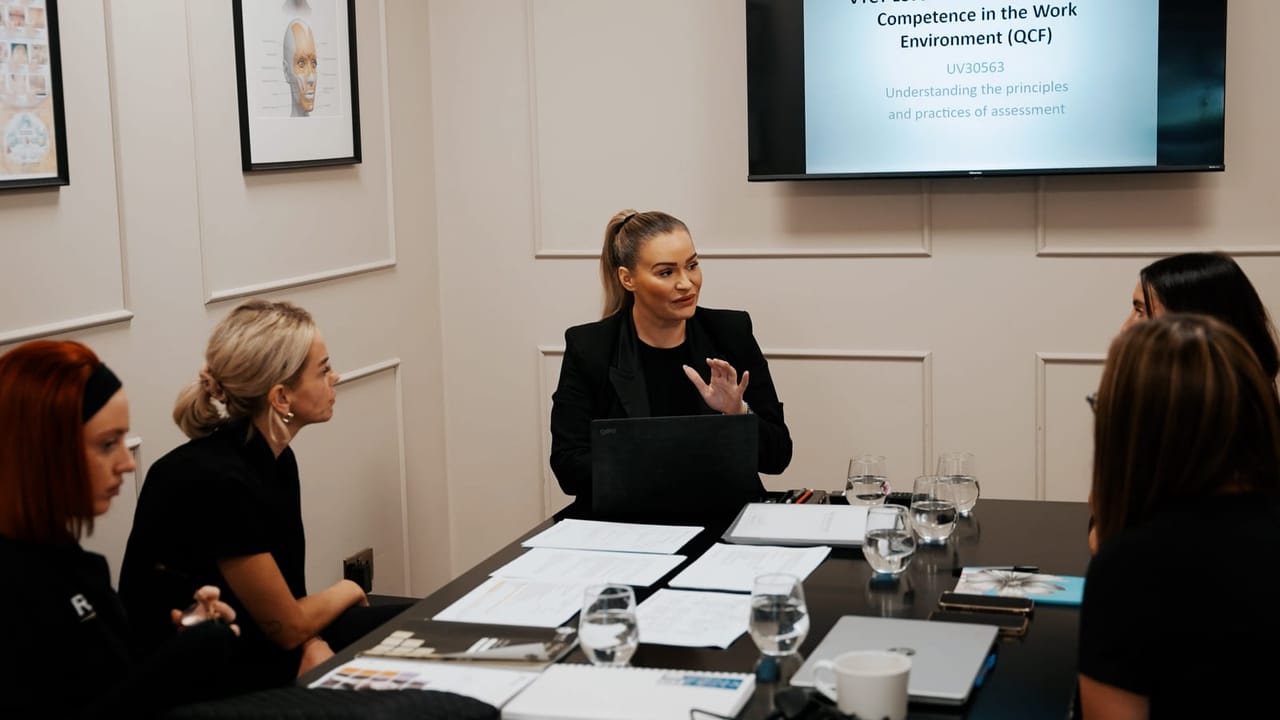
A recruitment video works when it gives someone information they genuinely cannot get from the job advert: what the place feels like, who they would be sitting next to, and whether they would be comfortable there. Those are not HR questions, they are filmmaking questions. The answer depends on who you put on camera, where you film them, how you script them and how you cut it. Here is what separates a recruitment video people actually watch from one they ignore, and how each decision gets made on a shoot.
Real employees beat actors every time
The single biggest determinant of whether a recruitment film lands is whether the people in it actually work there.
Actors are better on camera. That is precisely the problem. A trained performer delivers a line cleanly, hits the emotional beat and looks straight down the lens without flinching, and the viewer reads all of that as a performance. Candidates watching recruitment content are unusually sceptical. They are trying to detect spin, because they have been burned by it before. A polished delivery sets off that alarm.
Real employees do something an actor cannot: they pause in the wrong places, they laugh at their own answer, they go on a small tangent about a colleague. Those are the moments that persuade. Stock footage fails for the same reason: a generic shot of colleagues high-fiving in a glass meeting room tells a candidate nothing about your business, and they know it was bought rather than filmed.
There is a practical argument too. The person who has been in the role for two years can describe it better than any scriptwriter, because they know the detail: the first week, the bit that was harder than expected, the support they got. That specificity is what makes a film memorable.
Getting a nervous employee to relax on camera
The obvious objection is that real staff are not comfortable in front of a camera. True, and that is a production problem with production solutions.
The first is time. Rushing someone into a chair, pointing a lens at them and asking a big question produces a stiff answer. The first few minutes of any interview are usually unusable, and a good crew expects that, keeps recording and treats it as warm-up. Most people settle once they realise nothing terrible has happened.
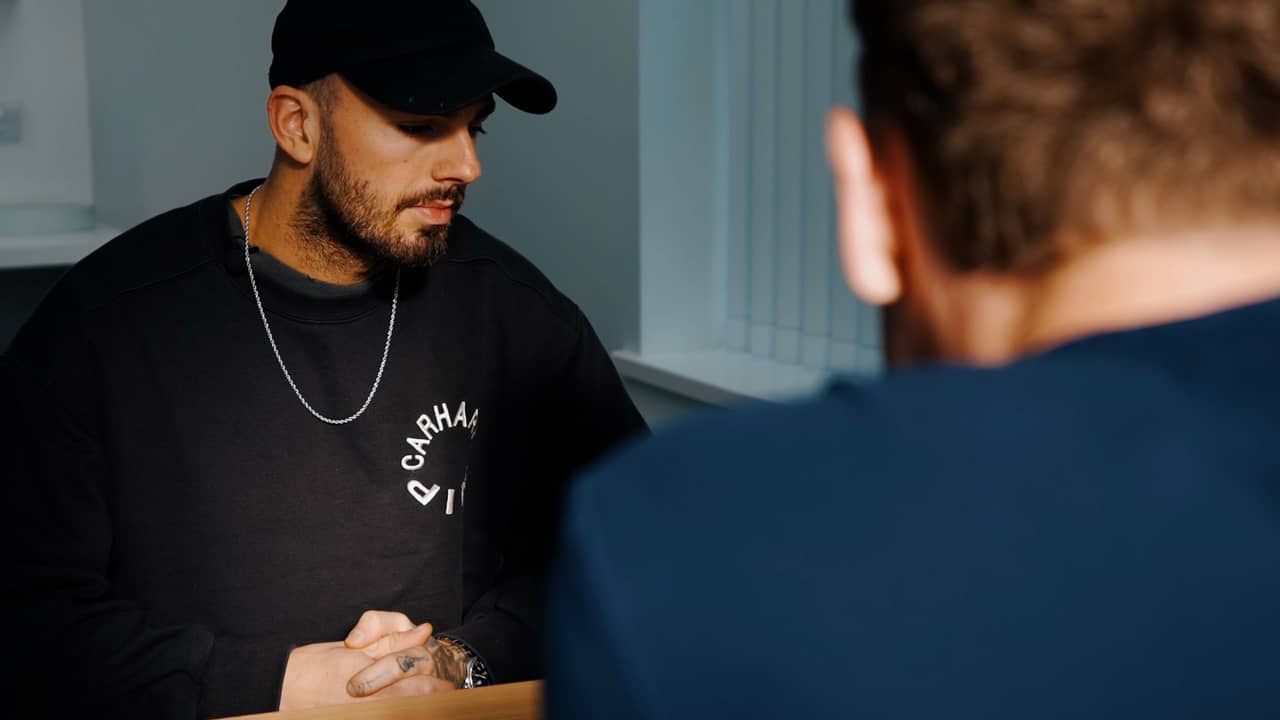
The second is removing the script. Handing an employee lines to memorise is the fastest way to make them look uncomfortable, because now they are performing and failing at it. A conversational interview, where the interviewer asks questions off camera and the subject talks to a person rather than a lens, almost always produces better material. The questions are prepared carefully, but the answers are not.
The third is the room. A smaller crew, fewer people standing behind the camera watching, and a quiet space away from colleagues who might wander past and make a joke all make a measurable difference. The fourth is simply telling people the truth: this will be edited, you can start an answer again, and nothing embarrassing will make it into the final film. Most nerves come from a fear of being stuck with a bad take.
Choose a real workplace over a studio backdrop
A clean studio background with coloured lighting looks professional and communicates nothing. An authentic workplace location does the opposite, because the point of a recruitment video is to show someone the environment they would be joining.
That means filming interviews in the actual workplace, with real depth behind the subject: a workshop, a kitchen pass, a sales floor, a corner of the office with the team visible but softly out of focus. It also means capturing the parts of the day that are not meetings. The walk in, the coffee queue, the handover between shifts, the thing that only your business does.
If the premises genuinely are not photogenic, the answer is not a studio. It is better framing, more thought about which corners to use and lighting that flatters what is there. Candidates do not expect a tech campus. They want honesty, because arriving on day one to find the real office looks nothing like the film is a trust problem you have created for yourself.
Script for culture, not for the job description
A recruitment video that recites responsibilities, salary bands and benefits is a job advert read aloud, and the written advert does that job better.
A culture message works differently. The script should be built around the questions a candidate is silently asking. What do people here actually do all day? Is this a place where someone new is supported or left to sink? What happens when things go wrong? What has somebody who joined two years ago gone on to do? Who would I eat lunch with?
In practice the "script" for this kind of film is a question list plus a structure. The structure is decided in advance: open with a hook, establish the business quickly, move through the people, land on progression and close on the invitation. The words come from the interviews. A writer then builds the edit from the strongest answers, rather than writing lines and asking staff to deliver them.
Avoid the vocabulary that has been drained of meaning. "Fast-paced", "like a family", "work hard, play hard" and "passionate" are so common in recruitment content that candidates filter them out. A specific anecdote about how a team handled a difficult week says more than any adjective.
Pacing: the careers page version and the social cutdown
These are two different films and should be briefed as such.
The careers page version is watched by someone who has already shown interest. They have clicked through, they are considering applying, and they will give you time. Ninety seconds to two and a half minutes is a sensible range. The pacing can breathe. Longer soundbites, room for a story to develop, wider shots that let the viewer look around the space.
The social or job advert cutdown is watched by someone who was not looking for you. It has to work in 15 to 30 seconds, it has to work with the sound off, and it has to earn attention in the first second or two. That means an immediate hook rather than a slow build, hard subtitles rather than optional captions, faster cuts, and a vertical or square crop rather than a letterboxed landscape frame shrunk into a feed.
Trying to make one film serve both purposes produces something too long for social and too thin for the careers page. Shoot once, plan for both, deliver both.
The practical bits: light, sound and a business that still has to run
Lighting a working office is harder than it looks. Overhead fluorescents cast shadows under the eyes, mixed daylight and tungsten create colour casts, and windows behind a subject turn them into a silhouette. A crew will usually place the subject so a window becomes a soft key light, add a panel to lift the shadow side, and control the background so it has some separation and depth rather than a flat wall.
Audio matters more than most clients expect. Viewers forgive slightly soft footage and abandon a video with echoing, distant or noisy sound within seconds. Open plan offices are difficult: air conditioning hum, phones, printers, footsteps. The usual fix is a small enclosed room, a lapel microphone on the subject and a second recorder as backup, plus a polite word with the nearest team about the next twenty minutes.
None of this should stop your business operating. A sensibly planned shoot takes one room for interviews, schedules staff in short slots so nobody loses a whole day, and captures workplace footage in planned bursts around genuine activity. The more a crew knows about the rhythm of the day in advance, the less it interrupts it.
Let the destination shape the brief
Before anything is filmed, decide where the video is going to live. Careers page, LinkedIn, Indeed or similar job boards, an in-person recruitment fair, a university milkround stand, an onboarding pack.
Each one changes technical decisions on the day. A film destined for a silent exhibition screen needs to work without dialogue. A LinkedIn cutdown needs vertical framing. A careers page hero video may need a version with no text burned in. These are capture decisions, not post-production ones, and telling your production company up front is what makes multiple versions affordable from a single shoot. It is the same principle that applies across corporate video generally: the brief begins with where the finished film will be seen.
Close with an instruction
A surprising number of recruitment videos end on a logo and silence, with no call to action at all. The viewer has just been persuaded and is then given nothing to do.
The last five to ten seconds should tell them exactly what happens next. Where the roles are listed, what to click, who to email, whether speculative applications are welcome. Keep it to one action. Spoken in the final soundbite and reinforced on screen works better than either alone, and the on-screen version should match the actual wording on the page it sends people to.
If you are weighing up a recruitment film and want to know what it would take to shoot it around your working week, you can get a fast quote from Flexxed and talk through the versions you would need.
Questions
Frequently Asked Questions
How long should a recruitment video be?
A careers page video usually sits between 90 seconds and two and a half minutes, because people watching it have already chosen to learn more. A version made for social feeds or a job advert should be far shorter, typically 15 to 30 seconds, and should carry its message even with the sound off.
Should we use real employees or actors in a recruitment video?
Real employees, in almost every case. Candidates are trying to work out whether they would fit in, and a trained actor reading lines gives them nothing useful to judge. The slight imperfections in how real staff speak are what make the film credible.
Do we need to shut the office down for filming?
No. Most recruitment videos are shot around a normal working day. A production crew will usually take over one quiet room for interviews and capture the rest of the workplace in short, planned bursts so disruption stays minimal.
What should a recruitment video actually say?
It should answer what it feels like to work somewhere, not list duties and benefits. Culture, progression, the people someone would sit next to and the kind of work they would be trusted with carry far more weight than a spoken job description.
Can one shoot produce both a careers page film and social cutdowns?
Yes, as long as the production company knows that in advance. Framing for both landscape and vertical delivery, and capturing enough usable material for short edits, has to be planned on the day rather than fixed in post.